Daily drivers
Claude Code
My main tool: ~90% of my projects are coded with it.
I do technology watch: I test AI tools the day they ship and turn them into value for companies.

Learning by doing, rather than in theory. That is the thread through everything I take on.
Professional bachelor · ETML-ES · 2026
What I learned
As much technology as marketing, accounting and business management.
Why this choice
Technology alone is not enough to understand a company. Management gave me the big picture: how an organisation decides, organises itself and creates value, well beyond the technical side.
CIMO · via BS-Team
What I do
At CIMO, my interest in AI led me to support them on integrating Microsoft Copilot, in particular building their own agents.
What I learned there
The AI-focused business analyst role, in the field: translating a business need into a concrete, useful solution.
Personal projects
What I do
I don't launch products, I build. Taking an idea all the way to a working product is what makes me understand a tool in depth.
Why
Building shows me, concretely, what each technology can bring to companies, often before they even start paying attention.
What I rely on today. My essentials up front, the rest as backup.
Where I write and ship all my code, from prototype to project.
My main tool: ~90% of my projects are coded with it.
IDE to run my code-review agents and automate my pull requests.
With GPT-6 Astra: quick website creation, tests and side-by-side comparisons with Claude Code.
My day-to-day assistant: thinking, tasks, writing.
My main LLM: writing, discussions, thinking.
To delegate and push concrete tasks forward.
To make the repetitive run on its own, with an AI layer on top.
My automations, with an AI layer on top.
The orchestrators that run my AI agents.
The orchestrator that runs my AI agents day to day.
Open-source autonomous agents: I explore it for local agentic AI.
Agentic in a professional context, within the Microsoft ecosystem.
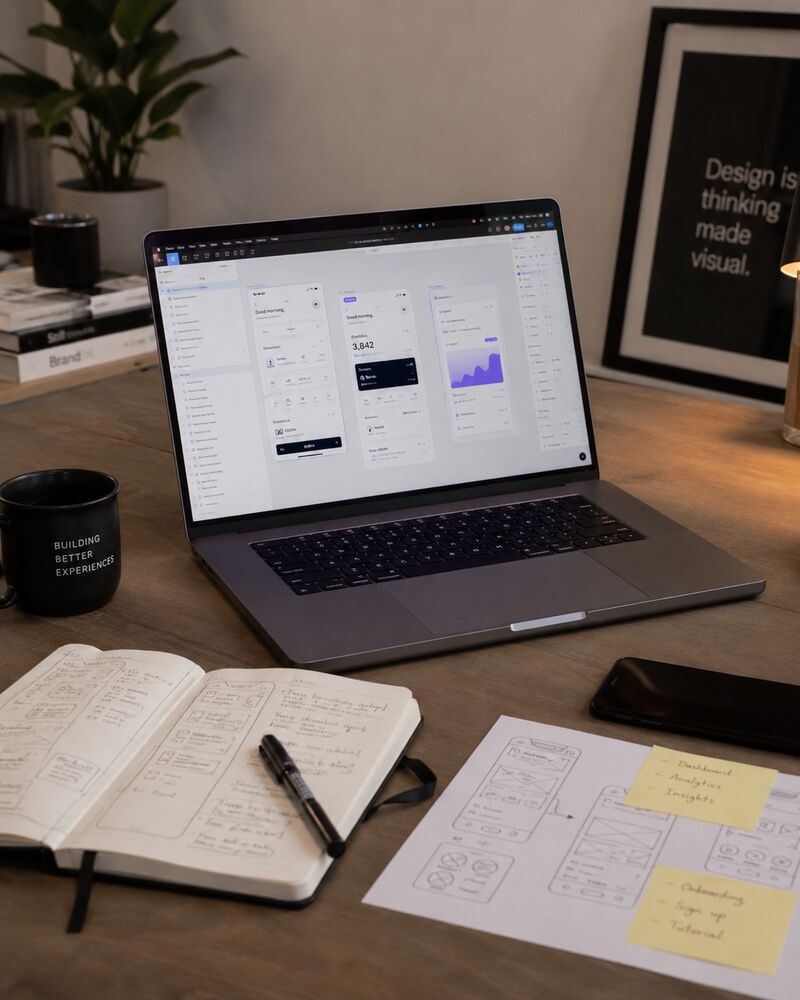
Designing and refining my interfaces before coding.
Generating UI mockups quickly from a prompt.
Refining and structuring my mockups and design system.
Generating images and videos.
Building presentations and visual decks quickly.
For image generation.
Video creation. It bundles the main image and video providers.
Learning fast, and keeping a record that organises itself.
Learning and source research.
A self-managed wiki, Karpathy-style (Obsidian driven by Claude Code).
No single model does it all: I pick the right one for each task.
Heavy tasks, advanced reasoning and demanding code.
My everyday model: thinking and discussion.
The advanced reasoning behind my agentic workflows.
The model behind Codex: some coding now and then, and to compare with Claude Code.
TypeSafe AI's decision model: no prose, just calibrated choices and scores. I'm testing it as a guardrail for my agents.
Research and documentation: my starting point before continuing on Claude.
A powerful open-weight model, currently in testing in my setup.
The trio powering my n8n workflows.
Not just tools: a complete system to code fast and clean.
What I do
Before writing a line, I frame the idea with SuperPower's brainstorming skill: it turns a hunch into a validated spec.
Why
So I don't head the wrong way. Half the work is knowing what to build.
$ claude› /brainstorming «feature idea»✓ spec validated → docs/specs/feature.mdThree projects, three grounds to turn an idea into something real.
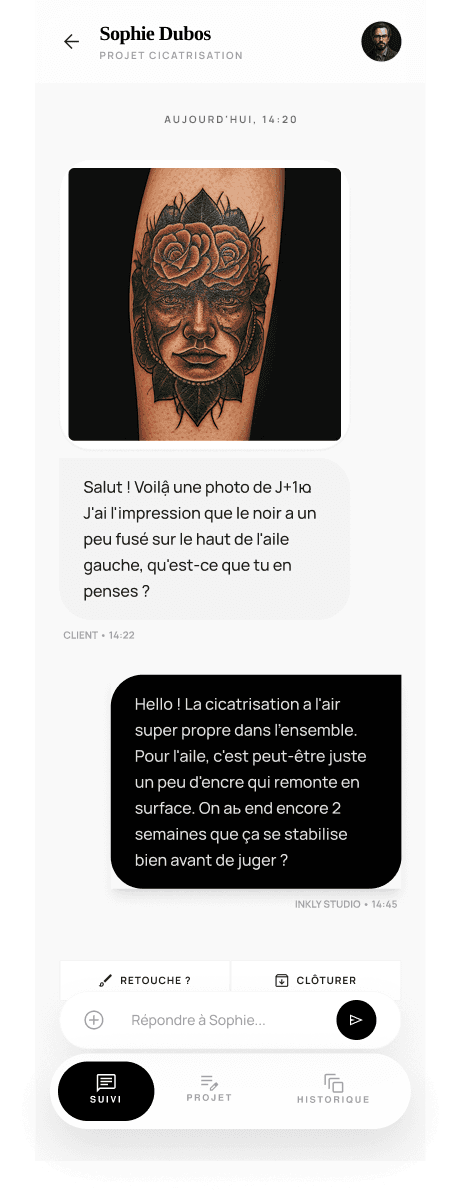
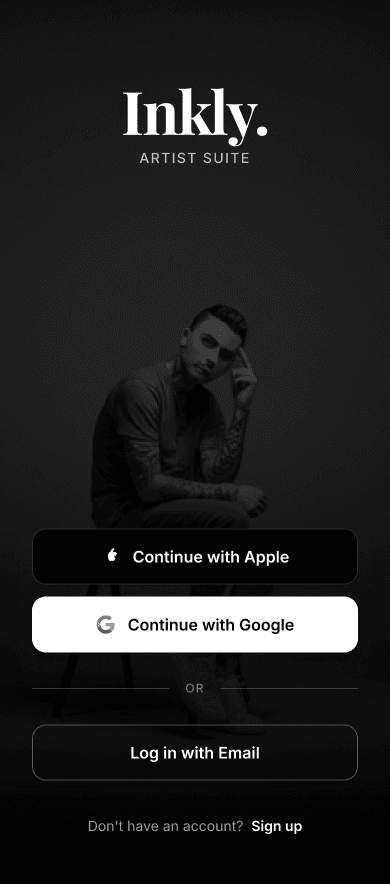
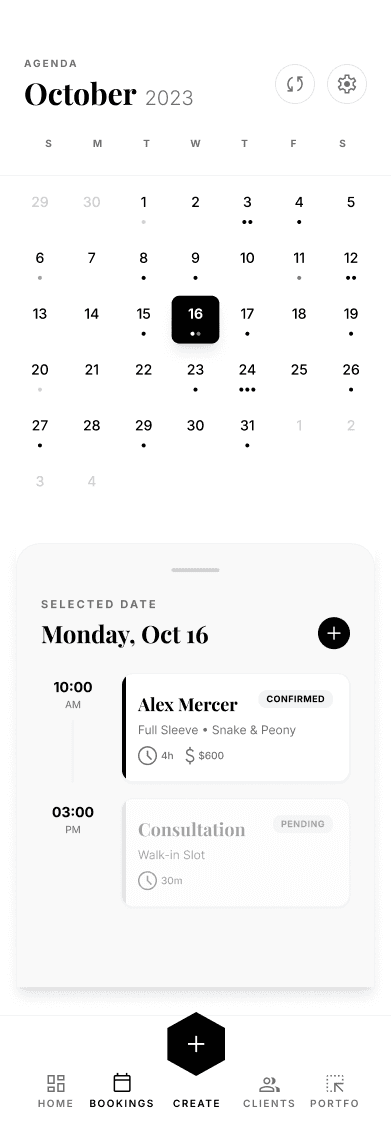
Booking appointments without getting lost in direct messages.
An app, currently in development, to book and manage appointments without going through Instagram direct messages, where clients always end up getting lost. With a scoring system and a built-in chat.
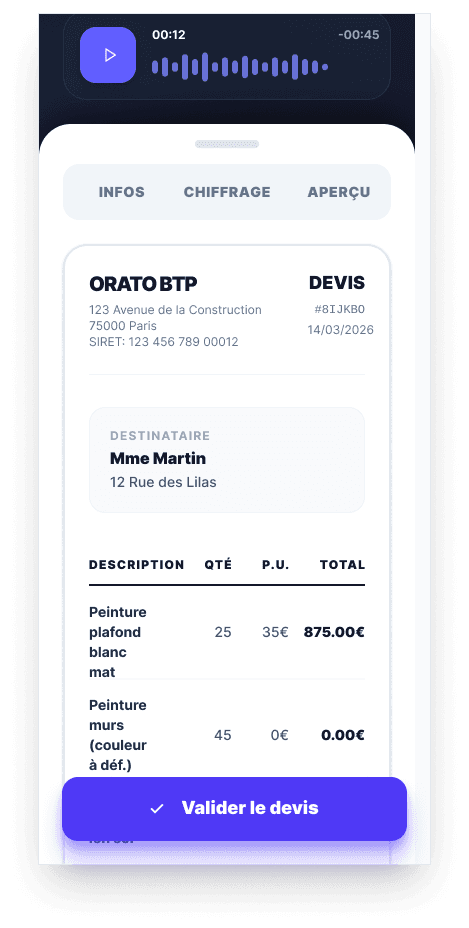
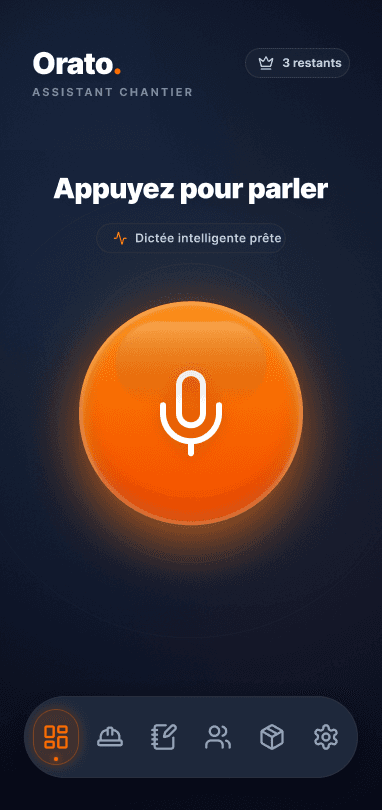
Quotes and site tracking, by voice.
A test project: letting independent construction workers create an instant quote and keep their site up to date, using only voice notes. No more language barrier, no more paperwork.
A life wiki that organises itself.
I store my technology watch, my documents and my tweets in Obsidian. With Claude Code, following Karpathy's idea, I turn it into a knowledge base that my AI maintains and links on its own through the links between .md files. The result: Claude Code always has the right context.
Two years of watching the field: from a simple LLM that answers to agentic AI, all the way to the harness that monitors my code quality.
My first AI-built website, in the very early days of Cursor. The result was modest, but that is where I developed a taste for building with these tools.
I follow the arrival of rules, sub-agents and MCP (released in November 2024). With each new feature, I fold it into how I code to gauge what it really brings.
I test open-source models as soon as they ship, locally, to compare their strengths. It is also a credible alternative in terms of cost and privacy for a company.
I move into automation and add an AI layer on top. Several prototypes come out of it, including Orato.
Discovered at CIMO: building agents directly inside the Microsoft ecosystem. A different approach to AI, more integrated and more governed.
With Inkly, I structure my entire development system: brainstorming plugins, MCP on the database, validation rules, sub-agents that check the code.
I dive into agentic: OpenClaw first, then Hermes and DeepSeek as the models powering my agents. The foundation of my future Life OS.
I follow Karpathy closely. His Obsidian-driven-by-Claude-Code method, for a wiki that organises itself, made a strong impression on me.
Sifting the noise for the signals that matter, then testing without delay.
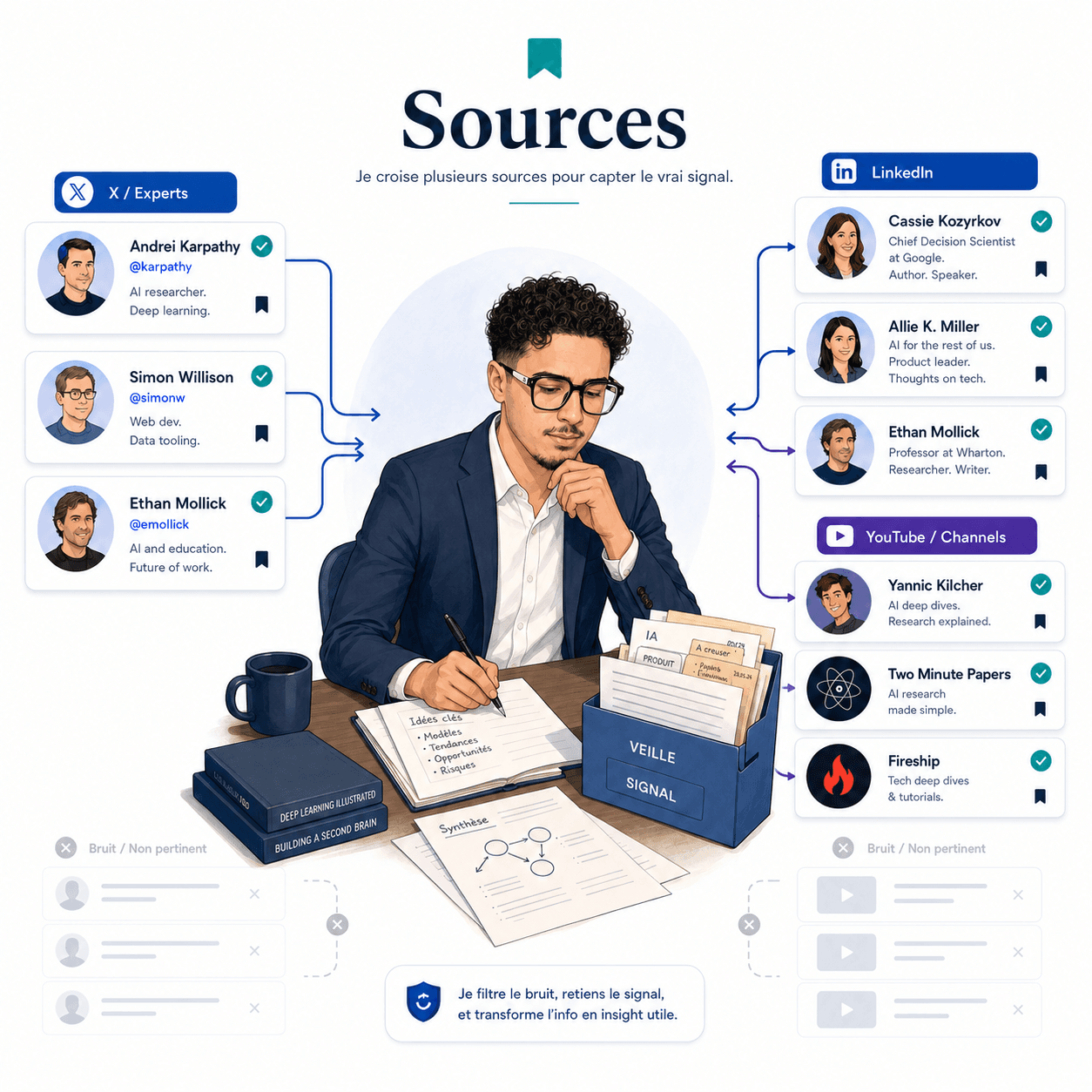
X and a handpicked set of YouTube channels, which I check every day: Anthropic, ClaudeDevs and Figma on X, Matt Pocock and AI Engineer on YouTube, plus people like Karpathy. I follow specific sources rather than the trend feed. Source quality is everything.
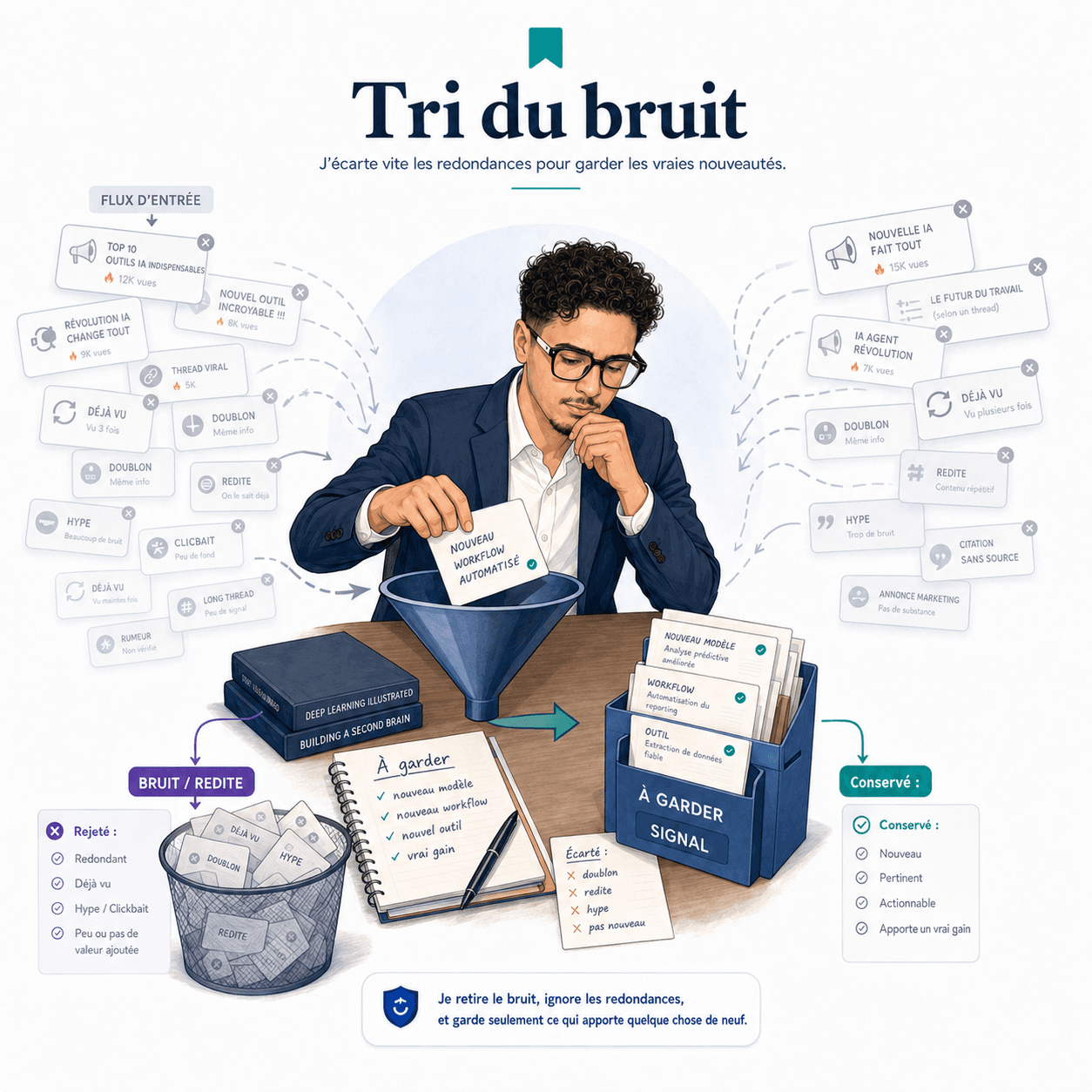
Most of what ships is noise or a rehash. I quickly set aside anything that adds nothing, keeping only the genuine developments.
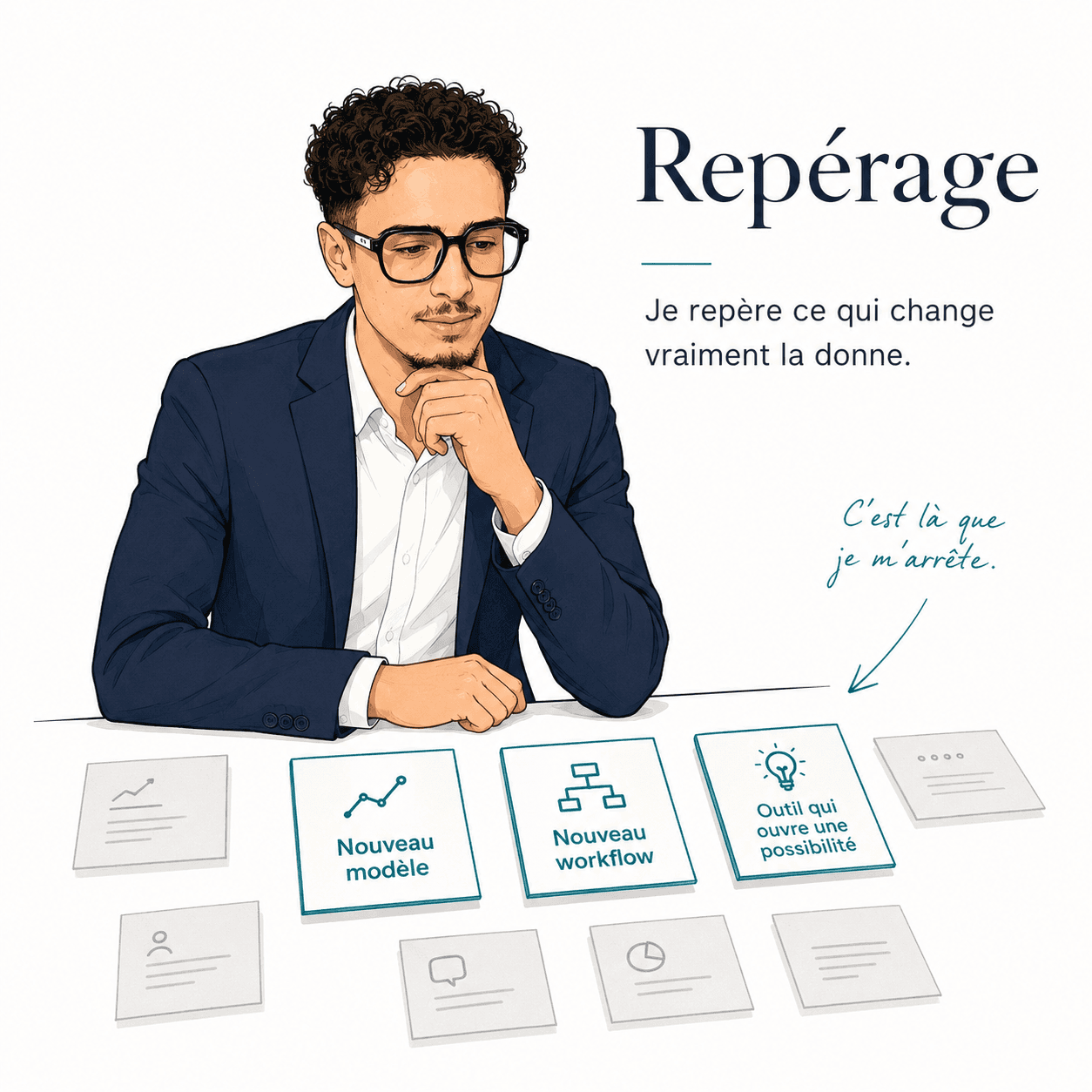
I look for what shifts things: a new model, a new way of working, a tool that opens a possibility. That is where I stop.
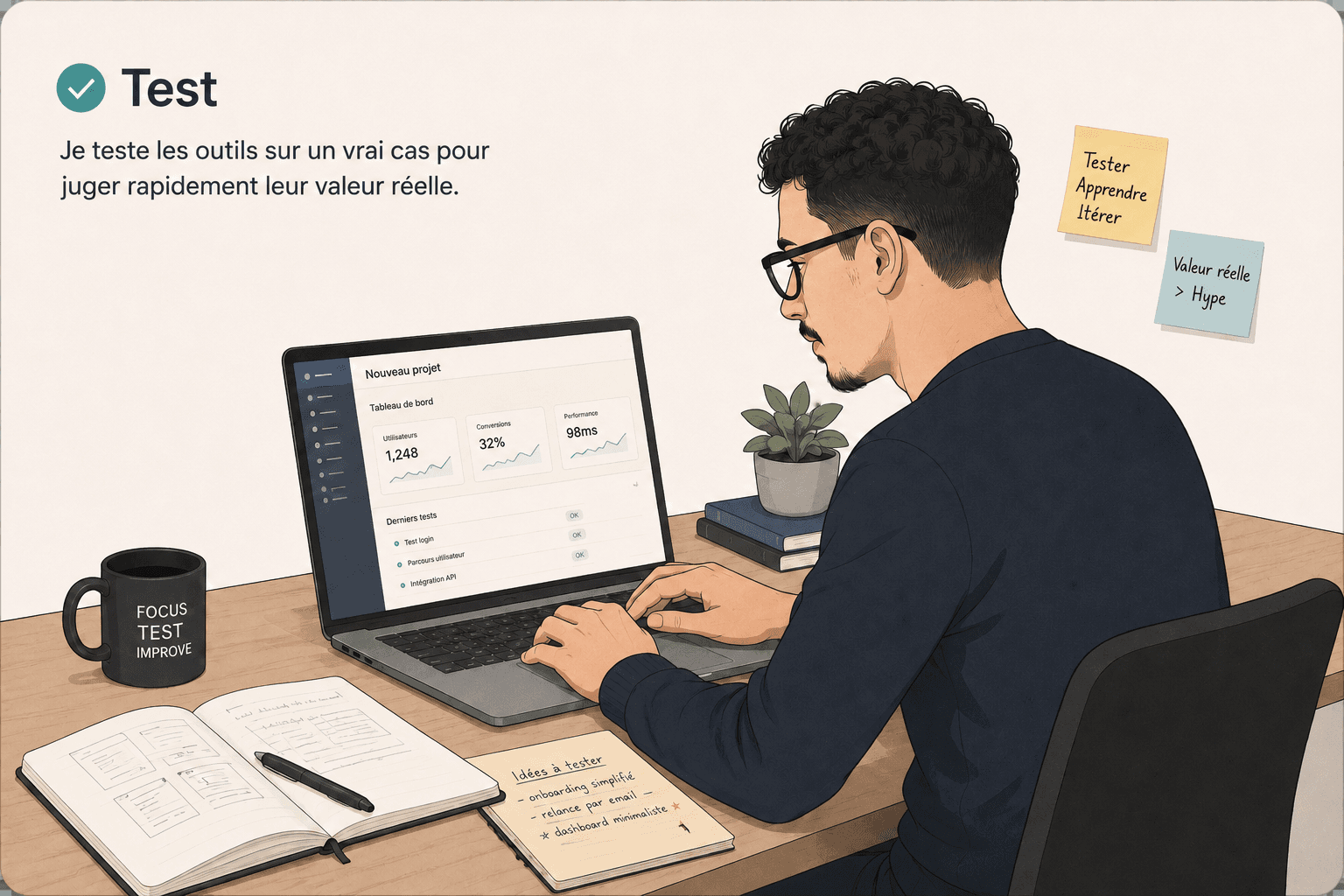
And above all, I put it to use immediately, on a real case. Real use is how you measure a tool's worth, beyond the promises.
Everyone talks about AI. Few people really say how to make the most of it. Here is how I read it.
AI is sold as a time-saving machine. The reality is more nuanced. The time it saves, we have often already spent elsewhere: setting it up properly, checking its answers, fixing its mistakes. Not to mention the cost, rarely counted honestly.
That doesn't mean it fails to deliver. It means we still judge it poorly, forgetting all the invisible work behind a result that “works”.
I see it as a final-year apprentice. On some tasks it is already autonomous and impressive. On others, it still needs guidance, review, correction. It isn't ready to go solo, but it learns fast when it is well supervised.
The real value, then, isn't in the tool alone, but in what you build around it: agentic systems, workflows designed for a precise use. And that isn't improvised. You have to test, run POCs, accept a few mistakes before it truly runs.
To make the most of it, you have to keep pace. Tools ship every week, models change, yesterday's best practices are already outdated. Keeping the good, dropping the rest, validating what holds in production: it is a full-time job.
And that is precisely the time most teams don't have. They have a business to run, not a technology watch to carry out on the side.
In Switzerland, we stay cautious about AI, and I understand it. Nobody wants to take risks on sensitive topics, and large groups already have the resources to ship to production.
But I am convinced SMEs have a real card to play. Less on customer service, heavy in governance and testing, and more on internal automation: the kind that eases teams' daily work and gives them back time for what really matters.
Keeping watch, testing the tools, validating what works and putting it in place: that is my everyday. Enough to free up time for your team, without the risk of carrying it all in-house.
Let's work together →We don't all come here for the same reason. Tell me what brings you, and I'll tailor my reply.